Special Guest: Stefan Madzar, PrEP & HIV Benefits Coordinator & Linkage Navigator at Magnet (San Francisco AIDS Foundation).
Stefan will present an update on Magnet’s injectable PrEP program, including challenges, successes, and lessons learned, and featuring clients who will discuss their experiences taking injectable PrEP.
Special Guest: Stefan Madzar, PrEP & HIV Benefits Coordinator & Linkage Navigator at Magnet (San Francisco AIDS Foundation).
Stefan will present an update on Magnet’s injectable PrEP program, including challenges, successes, and lessons learned, and featuring clients who will discuss their experiences taking injectable PrEP.
Thursday, July 18, 12-1pm PDT
STI Clinical Update Webinar– Summer 2024 Update and Review: Syphilis, Chlamydia, and Gonorrhea, County of Lake
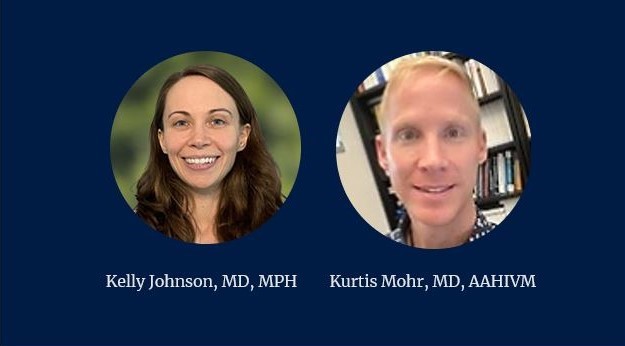
Presented by Drs. Kelly Johnson and Kurtis Mohr Wednesday, July 24, 2024 11:00AM – 1:00PM (PDT)
CME not available for viewing the webinar recording.
Learning Objectives
Describe the varied clinical manifestations of primary and secondary syphilis in adults and adolescents
Appropriately stage and treat syphilis in both pregnant and non-pregnant people
Recognize the different sequelae of sexually transmitted C. trachomatis and N. Gonorrhoeae infections & their recommended treatments
CAPTC is pleased to announce two job aids, focused on mpox recognition, diagnosis, testing, treatment, and vaccination.
The shorter job aid is called “Mpox Clinical Recognition and Testing Quicksheet: Mpox Presentations vs. Common Exanthems.” It is intended as a print resource, to help facilitate clinical recognition of mpox in health care settings. The longer job aid, “Mpox Clinical Recognition and Testing Overview,” is intended as an electronic resource. It has links to a number of helpful mpox-related resources.
A half-day, in-person (only) event. Registration limited to surrounding Counties. Registration prioritized for DIS, Clinicians.
Wednesday, May 29, 2024 8:00AM-12:00PM (PDT)
3.75 CME units at no cost
Veteran’s Center
Description:
Stanislaus County has experienced a steep increase in rates of STIs, including congenital syphilis and syphilis among women. Addressing these growing rates is an urgent public health priority that requires innovative partnerships. The Stanislaus County Department of Public Health and the California Prevention Training Center invite community medical providers and stakeholders to participate in this STI Update to enhance their knowledge in diagnosis, treatment, prevention, and control strategies.
Learning Objectives:
Describe current epidemiology of STIs, particularly syphilis & congenital syphilis in Stanislaus County
Understand CDPH screening recommendations, clinical manifestations, diagnostic approach, staging, and management of syphilis, including among pregnant women and infants.
Share best practices among providers that serve populations disproportionately impacted by and at-risk for contracting syphilis and other STIs
Presenters
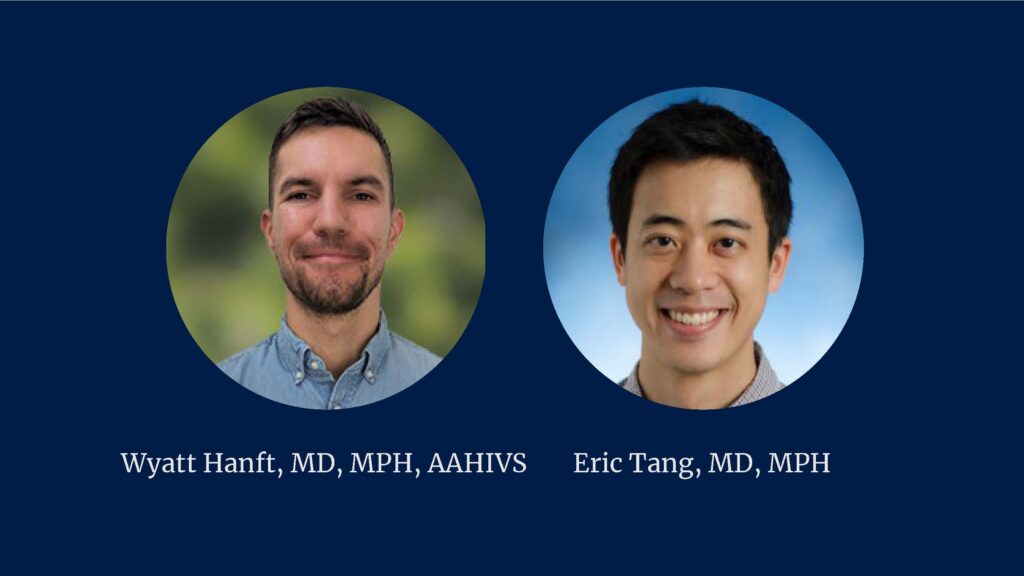
Dr. Wyatt Hanft STI Fellow, California Prevention Training Center & California Department of Public Health
Dr. Eric Tang Clinical Faculty, California Prevention Training Center Medical & Scientific Affairs Section Chief, STD Control Branch, California Department of Public Health
STI Clinical Update Webinar – Syphilis: A Case-Based Review and Update
March 28, 2024
9:30AM-11:00AM (MT)
Presented by Dr. Kelly Johnson
Please note: CME not available for viewing the webinar recording.
Learning Objectives:
List common causes for genital ulcerative disease
Interpret results of traditional & reverse syphilis screening algorithms
Explain the clinical significance of changes in non-treponemal titers
Name a resource for help interpreting different combinations of serologic results
Fact sheets for patients that answer basic questions about STIs.
South County session: Santa Barbara, CA (in-person only) Monday, April 22, 2024 11:00AM-1:00PM (PDT) 1.75 CME units at no cost
North County Session: Santa Maria, CA (in-person only) Tuesday, April 23, 2024 11:00AM-1:00PM (PDT) 1.75 CME units at no cost
Presenter Dr. Eric Tang, Chief, Medical & Scientific Affairs Section | Mpox Lead STD Control Branch, California Department of Public Health
Learning Objectives
Summarize current STI trends in Santa Barbara County
Describe the stages of syphilis and the recommended treatment and follow-up for people with syphilis
Describe how to diagnose, manage and treat DGI
2024 STI Clinical Update: San Francisco Department of Public Health (SFDPH)
Thursday, March 14, 2024
Hybrid event. Please note: CME not available for viewing the recording.
Presented by:
Dr. Oliver Bacon Medical Director, San Francisco City Clinic San Francisco Department of Public Health
Dr. Franco Chevalier Deputy Medical Director, San Francisco City Clinic San Francisco Department of Public Health
Dr. Stephanie Cohen Director, HIV/STI Prevention, Disease Control Branch, San Francisco Department of Public Health
Dr. Kelly Johnson Medical Director, California Prevention Training Center Public Health Medical Officer, STD Control Branch, California Department of Public Health
Emcee: Dr. Ina Park Principal Investigator, California Prevention Training Center
Description
More than 2.5 million cases of chlamydia, gonorrhea, and syphilis were reported in the U.S. in 2022, and San Francisco has higher chlamydia, gonorrhea, syphilis, and HIV rates compared to the rest of the state and nation. This half-day, hybrid event will provide important updates in the field of sexual health to help providers strengthen the delivery of STI prevention and care. Hear from local experts on STI epidemiology in San Francisco, updates on Doxy-PEP implementation, recognizing dermatologic manifestations of STIs, and a lively case panel.
Learning Objectives
Summarize current STI trends in San Francisco
Be familiar with updates to STI treatment guidelines and innovations in STI prevention and diagnostics
Understand how to implement Doxy-PEP for STI prevention
Recognize common dermatologic manifestations of STIs
STI Clinical Update Webinar – Introduction to Syphilis and Congenital Syphilis: A Phoenix IHS and CAPTC Event
January 11, 2024
8:30AM-12:00PM (MST)
Presented by CAPTC Clinical Faculty
Please note: CME not available for viewing the webinar recording.
Presenters:
Sharon Adler, MD, MPH, Clinical Faculty, California Prevention Training Center
Wyatt Hanft, MD, MPH, AAHIVS, STI Fellow, California Prevention Training Center
Tamara Ooms, RN, MSN, FNP, Program Manager, California Prevention Training Center
Ina Park, MD, MS, Principal Investigator, California Prevention Training Center
Rosalyn Plotzker, MD, MPH, Clinical Faculty, California Prevention Training Center
Moderator: Kelly Johnson, MD, MPH, Medical Director, California Prevention Training Center
Learning Objectives:
Describe the varied clinical manifestations of syphilis in adults & congenital syphilis (CS) in infants
Recognize that there are two different screening algorithms used to diagnose syphilis in adults
Define adequate treatment for syphilis, including during pregnancy
List at least 3 strategies to prevent syphilis in adults and infants
Before You Watch
By clicking this box, you agree to use these videos for training and educational purposes only. Do not copy, download, share, or distribute the content. These materials may not be uploaded or used in artificial intelligence or machine learning systems.
We use cookies to ensure that we give you the best experience on our website, but we also recognize the right to privacy. Please accept or disable cookies for this website.