Dr. Rosalyn Plotzker is an assistant professor in the UCSF Department of Epidemiology and Biostatistics, and also performs high-resolution anoscopy at the UCSF Anal Neoplasia Clinic, Research, and Education (ANCRE) Center.
Rosalyn completed a fellowship in Sexually Transmitted Diseases with CAPTC and the California Department of Public Health where she also currently serves as a public health medical officer and clinical lead for congenital syphilis prevention. She also leads efforts to improve HIV prevention and STD screening with the California Office of AIDS. Finally, Rosalyn directs the Virtual Approach to Gynecology Project, a virtual reality gynecologic training module for medical trainees.
Home
Training STD Clinical Update Webinar – Maternal & Congenital Syphilis Update for CA Prenatal Care Providers
STD Clinical Update Webinar – Maternal & Congenital Syphilis Update for CA Prenatal Care Providers
Syphilis among women and congenital syphilis are on the rise in California. Congenital syphilis is preventable with prompt detection and treatment during syphilis. Dr. Eric Tang of the California Department of Public Health (CDPH) and California Prevention Training Center (CAPTC) discusses prenatal care provider knowledge in management of maternal and congenital syphilis for pregnant patients.
Dr. Tang covers the following learning objectives for this webinar:
Describe California’s CS epidemiology
Recognize the clinical manifestations of CS
Discuss CS diagnosis, evaluation, and management
Report all laboratory-confirmed and clinically-suspected cases of CS to public health
Home
Training STD Expert Hour Webinar – Understanding the Concerning Rise in Maternal and Congenital Syphilis in Hawaii
STD Expert Hour Webinar – Understanding the Concerning Rise in Maternal and Congenital Syphilis in Hawaii
Oct 13, 2020
The California Prevention Training Center (CAPTC) and the STI/HIV Prevention Program at the Hawaiʻi Department of Health’s (HIDOH) Harm Reduction Services Branch present this webinar for healthcare providers and community service providers who work with communities that face cultural, economic, and language barriers to obtaining good prenatal and neonatal care.
This webinar will address the increasing rate of syphilis cases within Hawaii, with a special focus on maternal syphilis and congenital syphilis. Learners will gain an understanding of the local epidemiology of syphilis as well as the important role the Hawaii Department of Health performs in syphilis case follow-up and investigation. An overview of the pathophysiology of syphilis with its varied clinical manifestations will be discussed. Content will include the importance of staging, stage-based treatment as well as best practices for diagnosis and follow-up.
CDC Viral Hepatitis Professional Tools
CDC’s compilation of resources for diagnosing and managing hepatitis A, B, and C.
Home
Training STD Expert Hour Webinar – Delivering Sexual Health Services in the Time of COVID-19
STD Expert Hour Webinar – Delivering Sexual Health Services in the Time of COVID-19
August 13, 2020
The coronavirus (COVID-19) is impacting the delivery of sexual health services in California and throughout the United States. Dr. Ina Park and Dr. Rosalyn Plotzker provide an overview of recent CDC recommendations for STD diagnosis and treatment when in-person exams and visits are limited. They also discuss best practices for the use of telehealth and home-testing for STD care and PrEP management.
Drs. Park and Plotzker cover the following learning objectives for this webinar:
Share implementation strategies for self-collected testing to minimize clinician exposure to COVID-19 when seeing clients for STD-related symptoms
Identify changes to recommended syndromic treatment of urethritis, including treatment for gonorrhea and chlamydia
Describe management recommendations for patients with genital ulcer disease
Discuss HIV PrEP telehealth management approaches to ensure continuation of PrEP use for clients who are unable to get care in a clinic setting during and after the COVID-19 public health emergency
Home
Training STD Expert Hour Webinar – Genital Dermatology 101
STD Expert Hour Webinar – Genital Dermatology 101
June 1, 2020
Dr. Kenneth Katz covers the following learning objectives for this webinar:
Differentiate between genital skin diseases
Formulate differential diagnoses for genital skin disease
Identify genital skin diseases that warrant referral to specialty care
National Coalition for Sexual Health Tools for Healthcare Providers
This guide can help healthcare providers better integrate sexual health conversations and recommended preventive services into routine visits with adolescents and adults.
Home
Training STD Expert Hour Webinar – PrEP: What’s the 2- 1-1?
STD Expert Hour Webinar – PrEP: What’s the 2- 1-1?
August 13, 2019
Dr. Oliver Bacon facilitates an audience-led panel discussion with PrEP Experts and covers the following learning objectives for this webinar:
Be familiar with the evidence supporting 2-1-1 PrEP (also known as on-demand PrEP, sex-based PrEP, and pericoital PrEP)
Be able to counsel patients on the details of 2-1-1 dosing, including how to switch between 2-1-1 and daily PrEP
Be familiar with the current thinking about how to offer 2-1-1 dosing (who would & would not benefit from 2-1-1 dosing, how to prescribe, & follow-up care)
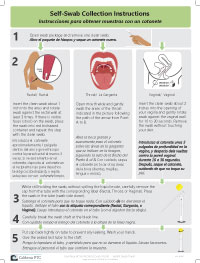
Don’t forget to swab! Among men who have sex with men, 84% of gonorrhea and chlamydia infections would be missed with urine-only screening1. Make sure your clients are screened for gonorrhea and chlamydia of the throat and rectum.
What:
Extragenital Screening for Gonorrhea and Chlamydia
Where:
Rectum and throat
Who:
Men who have sex with men (MSM), transgender women, people living with HIV, and people on PrEP who report having receptive anal and/or oral sex
When:
At least annually, or every 3 to 6 months as needed based on exposure
Why:
When urine-only screening is performed, up to 90% of rectal gonorrhea and 77% of rectal chlamydia infections remain untreated1. HIV-negative men diagnosed with rectal infections are excellent candidates for PrEP, because they have a high risk of HIV infection
How:
Swab specimen (self or clinician-collected swab)
The California Prevention Training Center supports clinics and providers in implementing rectal and pharyngeal STI screening.
Marcus JL, Bernstein KT, Kohn RP, Liska S, Philip SS. Infections missed by urethral-only screening for chlamydia or gonorrhea detection among men who have sex with men. Sexually transmitted diseases. 2011 Oct 1;38(10):922-4.
Before You Watch
By clicking this box, you agree to use these videos for training and educational purposes only. Do not copy, download, share, or distribute the content. These materials may not be uploaded or used in artificial intelligence or machine learning systems.
We use cookies to ensure that we give you the best experience on our website, but we also recognize the right to privacy. Please accept or disable cookies for this website.