STI Expert Hour Webinar – Male Partner Treatment to Prevent BV Recurrence: Evidence and Implementation
December 18, 2025 1:30 pm – 2:50 pm (PST)
Please note: CME not available for viewing the webinar recording.
Presenter
Catriona Bradshaw, MMBS(Hons), FAChSHM, FAHMS, PhD Professor Melbourne Sexual Health Centre, Alfred Health School of Translational Medicine, Monash University Melbourne School of Population and Global Health, University of Melbourne
Course Description
This seminar will discuss the epidemiological and microbiological evidence and pilot data that led to the StepUp randomised controlled trial (RCT) – an RCT that demonstrated treating male partners with a combination of oral and topical antimicrobials at the time a women is being treated for bacterial vaginosis (BV) significantly improved cure over 12 weeks. The trial methodology and findings will be presented in detail. The seminar will have a focus on the practicalities of implementation and prescribing including examples of free online resources available to assist clinicians in discussing and providing partner treatment for BV, consumer resources to assist informed decision making, and qualitative research findings. Time will be made available for audience discussion and participation.
Learning Objectives
Participants will be able to understand the rationale and evidence for male partner treatment for BV and apply this new knowledge to their clinical practice.
Participants will be able to discuss partner treatment for BV with their patients, facilitate shared decision making, understand where to access evidence-based resources, and make informed decisions regarding the provision of this intervention for heterosexual couples.
For Patients: Ureaplasma urealyticum FAQ
Developed by the San Francisco Department of Public Health and California Prevention Training Center, this practical resource addresses frequently asked questions about the genital bacterium Ureaplasma urealyticum (UU), including:
What is UU?
Is it always harmful?
When are testing and/or treatment for UU recommended? (And when are they not?)
The goal is to help patients learn the facts about this common but often misunderstood bacterium.
Developed by the San Francisco Department of Public Health and California Prevention Training Center, this practical resource addresses frequently asked questions about the genital bacterium Ureaplasma urealyticum (UU), including:
When screening, testing, and/or treatment for UU are (and are not) recommended,
How to interpret positive test results in asymptomatic patients, and
How to approach partner management.
The goal is to help providers navigate the uncertainty around UU, avoiding unnecessary testing and treatment while ensuring appropriate treatment when indicated.
STI Clinical Update Webinar – Congenital Syphilis Scenarios: A case-based overview
April 28, 2025 12:00PM -1:15PM (PDT) CME not offered for viewing the webinar recording.
Course Description
This presentation reviews four separate cases of congenital syphilis (CS). Each case illustrates one of the four CS Scenarios, as defined by the Centers for Disease Control and Prevention (CDC). Through these cases, learners will gain an understanding of the diagnosis and management of the CDC CS Scenarios. The cases are shown from two viewpoints: a clinical pediatric infectious disease perspective and a public health medical officer standpoint.
Learning Objectives
Describe the diagnostic criteria for the four congenital syphilis scenarios, as described by the Centers for Disease Control and Prevention
Identify at least one public health resource for congenital syphilis management
Understand the different lab tests that can be used to evaluate an infant exposed to syphilis during pregnancy.
Presenters
Elizabeth Partridge, MS, MD, MPH Dr. Partridge is an Associate Clinical Professor of Pediatric Infectious Diseases at the UC Davis Medical Center (UCDMC) in Sacramento, CA. She provides inpatient and outpatient consultation for children with acute and chronic infections. Dr. Partridge serves as medical director of infection prevention for the UC Davis Children’s Hospital. Her clinical and research interests include hospital epidemiology & infection prevention. She has a special clinical interest in the prevention and management of congenital Syphilis infection.
Rosalyn Plotzker, MD, MPH Dr. Plotzker is an Assistant Professor in the UCSF Department of Epidemiology and Biostatistics and also performs high-resolution anoscopy at the UCSF Anal Neoplasia Clinic, Research, and Education (ANCRE) Center. She completed a Fellowship in Sexually Transmitted Diseases with the CAPTC and the California Department of Public Health (CDPH). She serves as a Public Health Medical Officer in the STD Control Branch at CDPH.
To request an accommodation for this event, please email captc@ucsf.edu at least a week in advance of the event.
Clinical Guidance: Infant and Child Follow-up After Exposure to Syphilis in Utero
Designed to support clinicians and public health practitioners, this resource provides detailed algorithms for the evaluation, treatment, and follow-up of neonates, infants, and children exposed to syphilis during pregnancy. Developed in alignment with the 2021 CDC STI Treatment Guidelines, the resource outlines step-by-step instructions for monitoring RPR/VDRL titers, interpreting titer trends, and ensuring thorough follow-up care for infants and children affected by syphilis.
Neisseria Gonorrhoeae (NG) Culture and Antimicrobial Susceptibility Testing (AST) Availability for California Providers
Designed for healthcare providers in California, this resource from the California Department of Public Health provides a detailed list of laboratories that offer Neisseria gonorrhoeae culture and/or antimicrobial susceptibility testing – both of which are recommended for managing suspected gonorrhea treatment failures and disseminated gonococcal infections.
CLIA-Waived Syphilis Point-of-Care Testing Options for Providers
This clinical resource outlines the CLIA-waived point-of-care testing options available for syphilis, including the Syphilis Health Check and the DPP HIV-Syphilis System. The document summarizes and compares the two CLIA-waived point-of-care tests, then answers frequently asked questions – including who can perform these tests, in what settings they may be most useful, and how to follow-up reactive point-of-care test results.
In the last installation of NNPTC’s 3 part Syphilis Series, learn from experts Dr. Jason Zucker of the New York City STI PTC & Dr. Erica Hardy of the Sylvie Ratelle STI/HIV PTC.
Case Based Discussions on Congenital Syphilis & Syphilis in Pregnancy
Learning Objectives
Describe the importance of interprofessional collaboration in sexual health care.
Describe current STD/HIV screening strategies including diagnostic algorithms.
Describe current STD/HIV treatment recommendations.
In the second installation of NNPTC’s three part Syphilis Series, learn from our NNPTC experts, Dr. Khalil Ghanem of the PTC at Johns Hopkins & Dr. Arlene Sena of the Southeast PTC.
Case based discussions of clinical conundrums
Experts walk through cases & make treatment decisions
Learning Objectives
Describe the importance of interprofessional collaboration in sexual health care.
Describe current STD/HIV screening strategies including diagnostic algorithms.
Describe current STD/HIV treatment recommendations.
STI Expert Hour Webinar: Shared Decision Making in Sexual Health
Tuesday, February 25, 2025 11:30AM-12:45PM (PST) 1.25 CME units at no cost
Recording currently unavailable. Please note: No CME available for viewing the webinar recording.
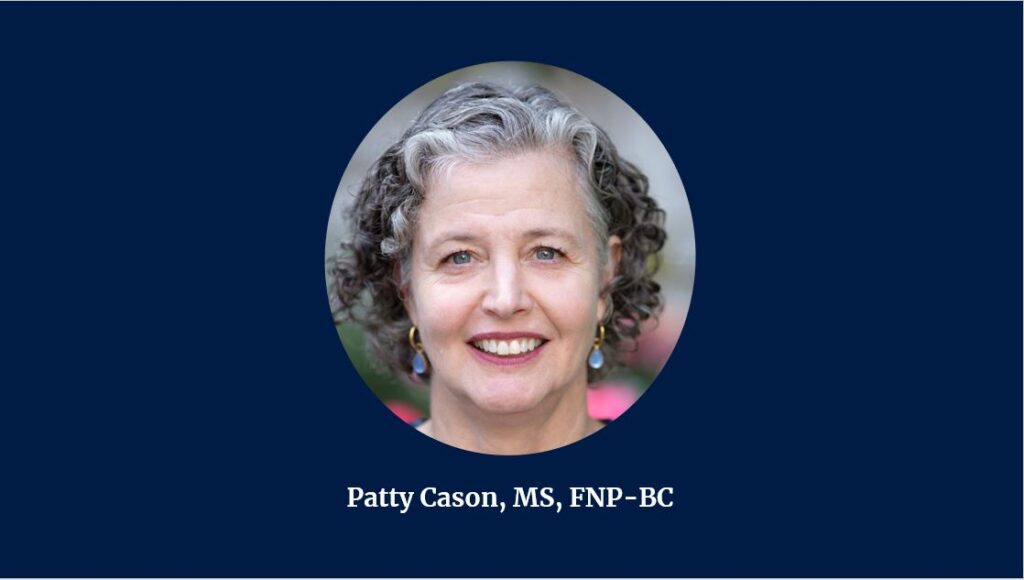
Presenter Patty Cason, MS, FNP-BC President, Envision Sexual and Reproductive Health
Course Description A plethora of national guidelines recommend shared decision making as a person-centered way to engage with patients who are making decisions about their health. The goal is for patients to benefit from the provider’s contribution of scientific information while being acknowledged as the experts on themselves. This session will provide a specific, detailed approach to this and language suggestions to operationalize shared decision-making conversations.
Learning Objectives
Define shared decision making
Describe three contributions a provider makes during a shared decision-making conversation
List four ways to acknowledge a patient
Before You Watch
By clicking this box, you agree to use these videos for training and educational purposes only. Do not copy, download, share, or distribute the content. These materials may not be uploaded or used in artificial intelligence or machine learning systems.
We use cookies to ensure that we give you the best experience on our website, but we also recognize the right to privacy. Please accept or disable cookies for this website.