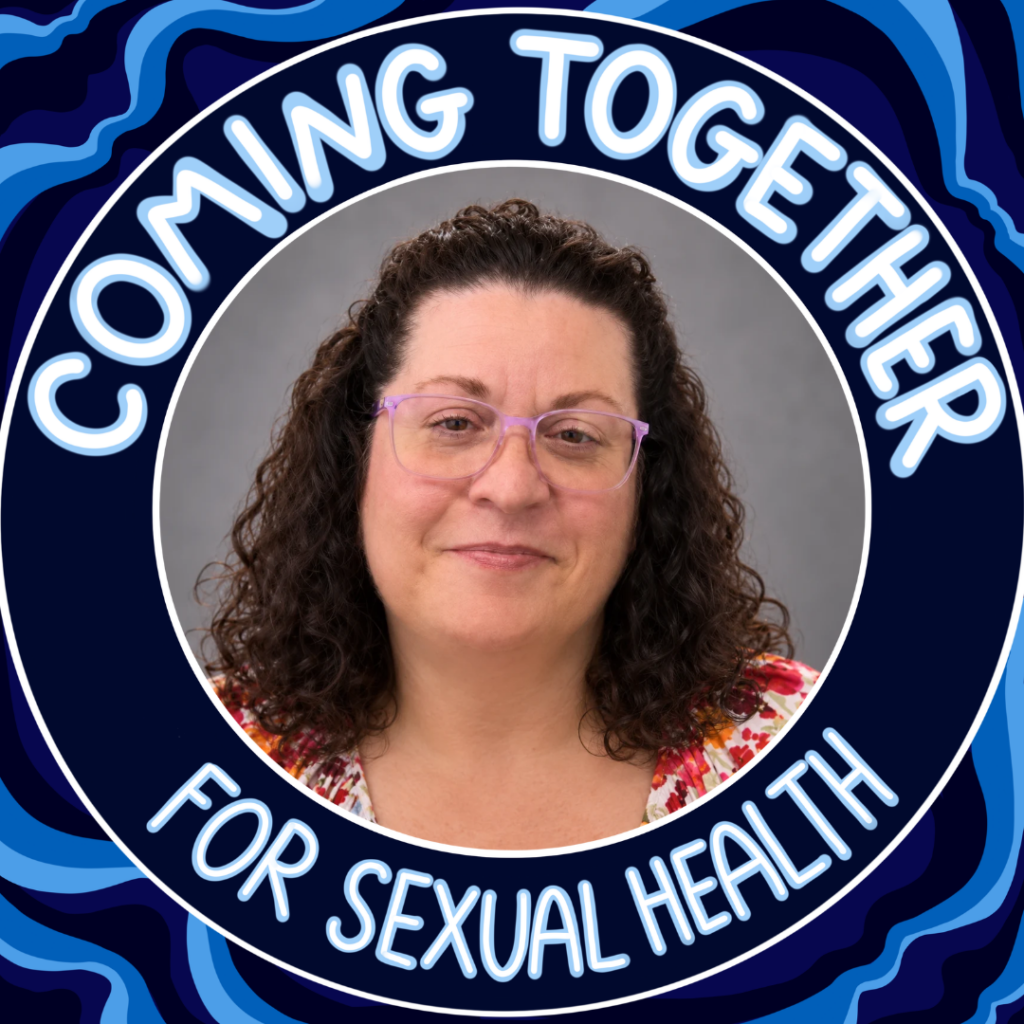
Checking It at the Door: What It Means to Be an Ally with Amy Nelson
Content warnings: Description of a person dying of AIDS in the 1980s, discussion of abortion rights, references to sexual vulnerability and coercion, and some strong language.
In 1987, a junior high hospital volunteer walked into an ICU and saw bright, youthful photos taped outside a patient’s room. The man in the bed looked nothing like them. She asked her mom, an ICU nurse, what was wrong. The answer was AIDS. That volunteer was Amy Nelson, and HIV has been part of her life’s work ever since.
Host Duran Rutledge met Amy during a CAPTC community of practice, when she said that as a white cisgender lesbian, she would never know what it’s like to be a Black or brown man who has sex with men facing barriers to PrEP. That honesty sparked this conversation about what allyship looks like in practice.
Amy shares the grad school lesson that changed her thinking: telling a community to change what it eats isn’t about food, it’s about culture and identity. Duran and Amy also talk about sitting with someone who is newly diagnosed and letting them cry, and why providers need to “check it at the door” and leave judgment out of care.
Key Words: allyship, HIV prevention, PrEP, cultural humility, community engagement, rural health, New Hampshire, public health, stigma
Read the transcript of this episode.
- An Ecological Perspective on Health Promotion Programs (McLeroy et al., 1988)
- CDC Social Network Strategy for HIV Testing Recruitment
- Ryan White HIV/AIDS Program
Past episodes of our podcast to follow this one up:
- S3 Ep4 PrEP Supports: Reflections on the Campaign
- S4 E2 Harm Reduction by Heart with Braunz Courtney
CAPTC-Related Training and Resources:
Amy L. Nelson has always known that she wanted to help others. With a degree in health education and a Master of Public Health in Health Promotion Sciences, she has built a career centered on prevention, education, and community collaboration.
A defining moment in Amy’s journey came in graduate school, when learning about the Social Ecological Model changed how she understood health and human behavior. She recognized that people’s choices do not happen in isolation. They are shaped by history, culture, family, community, and the conditions that surround them.
That understanding continues to guide Amy’s work and her approach to allyship. She values authentic relationships, strong community networks, and the belief that everyone has something meaningful to contribute. Outside of work, Amy enjoys traveling with her spouse, spending time in nature, and occasionally digging in the dirt.